What is an Industrial Engraving Machine and How Does it Work?
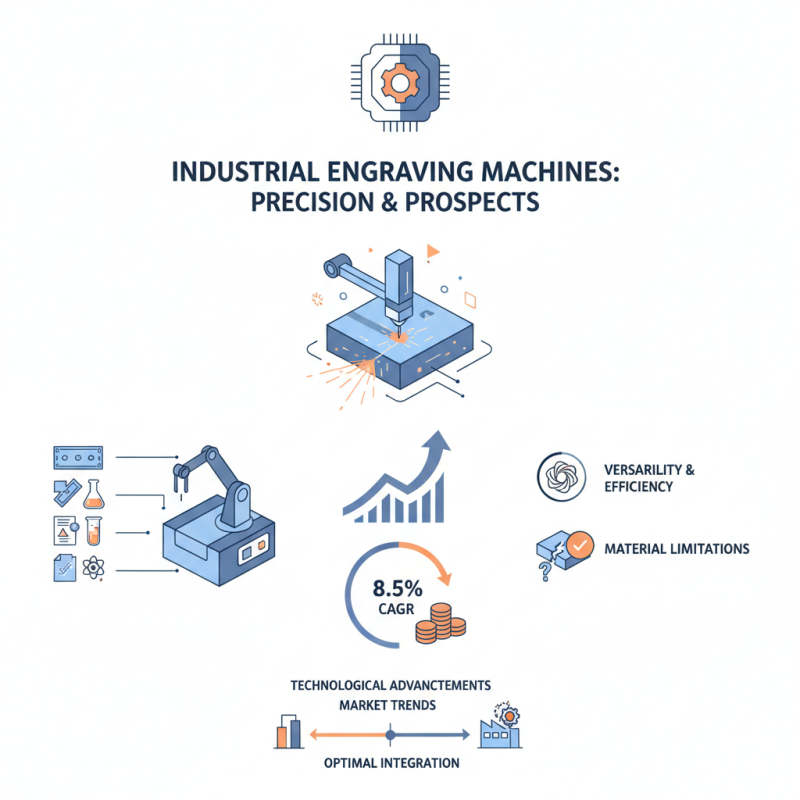
An industrial engraving machine is crucial in many manufacturing sectors. This device creates precise engravings on various materials, including metal, glass, and plastic. According to recent industry reports, the engraving machine market is projected to grow significantly. With a compound annual growth rate (CAGR) of 8.5%, the demand for advanced engraving technologies is rising.
These machines offer versatility and efficiency. They can produce intricate designs for branding or artistic purposes. However, they also have limitations. Not all materials can be engraved effectively, and some require special handling. It is essential to understand these challenges to maximize performance.
As industries evolve, the role of industrial engraving machines becomes more critical. Companies must stay informed about technological advancements and market trends. This knowledge can lead to better investment decisions and improved product offerings. It’s important to reflect on how to integrate these machines into existing workflows for optimal results.
What is an Industrial Engraving Machine?
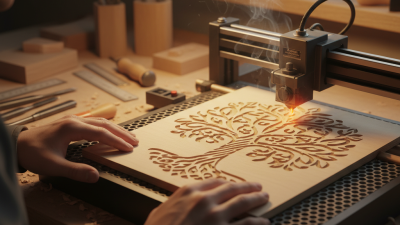
An industrial engraving machine is a powerful tool used for marking surfaces. It creates precise and detailed designs on various materials. These machines come in different types, including laser, mechanical, and rotary engravers. Each type has its unique method of engraving.
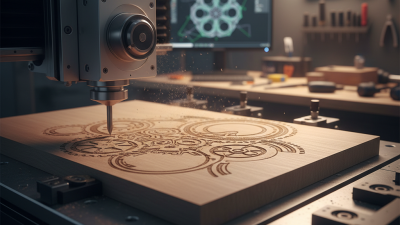
The engraving process typically begins with a design file. This file guides the machine as it works. The engraving head moves along the surface, carving out the chosen design. It can produce intricate patterns, logos, or even text. Manufacturers often use it for branding and product identification.
However, operating an industrial engraving machine requires skill. Misalignment can lead to errors in the final product. Not every design may work perfectly on every surface. A lack of understanding of material properties can result in subpar engraving quality. Reflection and practice are essential for achieving consistent results. Proper calibration and maintenance are crucial to avoid costly mistakes.
What is an Industrial Engraving Machine and How Does it Work?
| Feature |
Description |
| Machine Type |
Laser Engraving Machine |
| Engraving Process |
Uses laser beams to engrave designs on various materials |
| Materials |
Wood, glass, acrylic, metal, plastic |
| Common Applications |
Sign making, custom gifts, industrial parts marking |
| Precision |
High precision with engravings as fine as 0.1 mm |
| Operation Control |
Computer-controlled via design software |
| Setup Time |
Minimal setup time, typically under an hour for new designs |
| Cost Efficiency |
Reduces labor costs and material waste |
Key Components of Industrial Engraving Machines
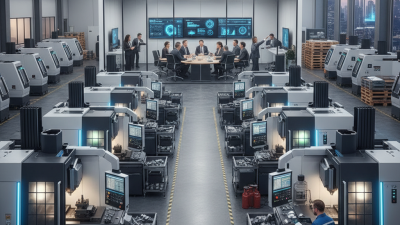
Industrial engraving machines play a vital role in various manufacturing processes. These machines are designed to engrave precise patterns and designs onto different materials. They are commonly used in metalworking, glass engraving, and other applications. Understanding their components is crucial for efficient operation.
The engraving head is the heart of the machine. It contains the cutting tool that performs the engraving. Selecting the right tool for the material can be challenging. A poor choice can lead to imperfections in the final product. Additionally, the machine's control system is essential. It guides the engraving head, ensuring accurate movements and depth adjustments. Operators need to be skilled in programming these controls.
Another significant component is the work table. It supports the material being engraved. Proper securing of the material is vital. Any movement during the engraving process can ruin the design. Lastly, the cooling system prevents overheating. If not functioning correctly, it can lead to tool damage and degraded results. Regular maintenance of all components is necessary, yet often overlooked. Neglect can lead to inefficiencies and costly errors.
How Industrial Engraving Machines Operate
Industrial engraving machines play a crucial role in various manufacturing sectors. They are designed to create precise designs on a variety of materials, such as metal, glass, and plastic. According to industry reports, the global market for engraving machines is expected to grow significantly, reaching a value of over $1 billion by 2025. This growth indicates a rising demand for customization and personalization in products.
How do these machines operate? Most industrial engraving machines use advanced technologies like laser or rotary engraving. Laser engraving involves focused light beams to vaporize the material's surface, creating intricate designs. In contrast, rotary engraving employs a cutting tool to carve designs. Both methods require skill and experience to achieve the desired results. However, challenges remain. Factors like material type and machine calibration can affect engraving quality. Many operators still grapple with these issues, demonstrating that mastery isn’t immediate.
Moreover, the integration of automation is on the rise. Automated systems can enhance speed but may overlook unique details that manual engraving captures. Reports show that while automation can increase efficiency by up to 70%, it can also lead to uniformity in products, missing details that a human touch provides. Balancing efficiency and quality is a continuous debate in the industry.
Applications of Industrial Engraving Machines in Various Industries
Industrial engraving machines have a wide range of applications across various industries. They are essential in manufacturing, electronics, and even packaging. For instance, a report from Market Research Future indicates that the global engraving machine market is expected to grow at a CAGR of 5.6% from 2021 to 2027. This growth reflects a rising demand for precision and customization.
In manufacturing, engraving machines are used for marking parts. This method improves traceability and quality assurance. The automotive industry benefits greatly, as it demands precise identification of components. Additionally, the electronics sector utilizes engraving for circuit boards. The ability to produce intricate designs enhances functionality.
**Tip:** Ensure your engraving machines are regularly maintained. Neglecting maintenance can lead to inconsistencies in quality.
In packaging, these machines play a vital role. They can quickly print unique designs and barcodes on various materials. This versatility caters to the needs of brands looking to stand out. However, businesses must consider the potential waste in materials if designs are not well thought out.
**Tip:** Always prototype designs before full production to avoid costly errors.
Advantages of Using Industrial Engraving Machines Over Traditional Methods
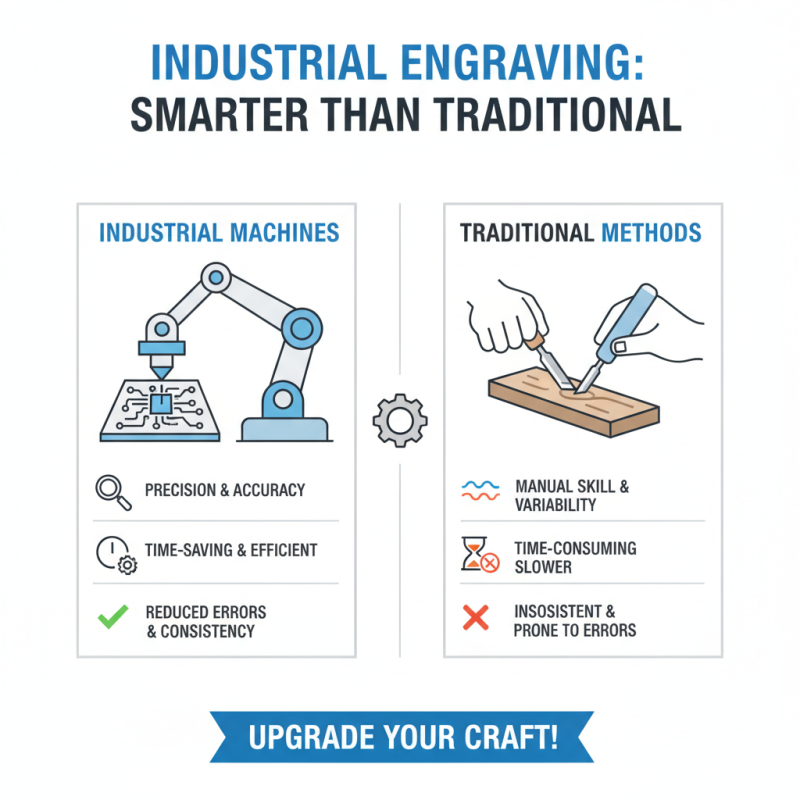
Industrial engraving machines offer numerous advantages over traditional engraving methods. One of the primary benefits is precision. These machines use advanced technology to achieve intricate designs with outstanding accuracy. The ability to engrave detailed patterns saves time and reduces errors significantly. Traditional methods often rely on manual skills, which can lead to inconsistencies.
Speed is another key advantage. Industrial machines operate much faster than manual engraving. Tasks that once took hours can now be completed in minutes. This efficiency can boost productivity, allowing businesses to meet tight deadlines. Moreover, less labor is needed when using these machines, which can reduce labor costs in the long run.
However, reliance on technology comes with its own set of challenges. For instance, machines can malfunction. Maintenance is essential to ensure proper functioning. Operators must be trained to handle both the equipment and troubleshooting. The initial investment in industrial engraving machines can also be high. It's crucial for businesses to weigh these factors against the benefits they provide.